Article Sidebar
Main Article Content
Abstract
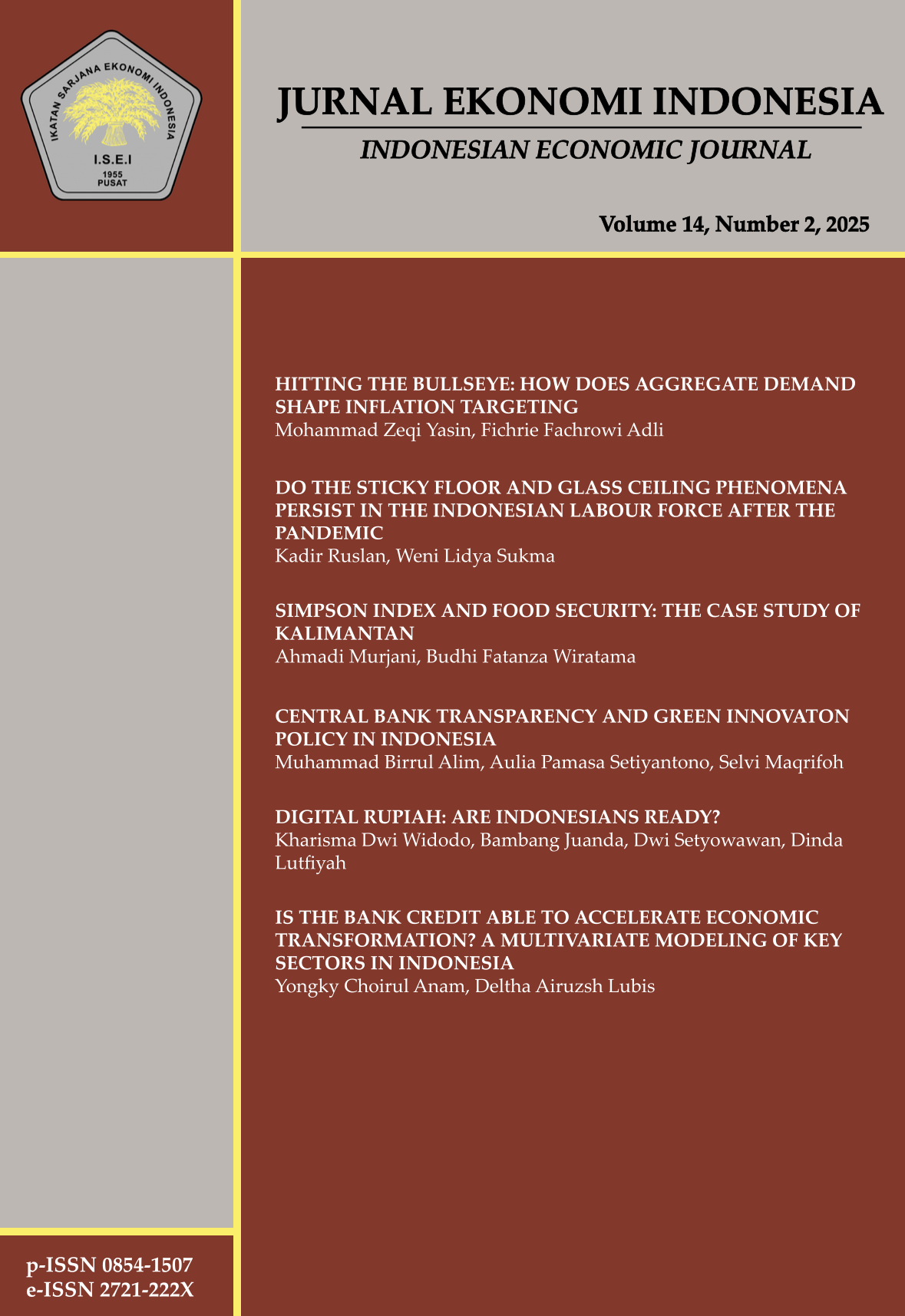
Our study aims to examine the evolution of gender wage gaps and their decomposition by employment status in Indonesia during the pre-pandemic, pandemic, and post-pandemic periods, using SAKERNAS data from 2018 to 2023. The OLS and RIF-OLS regression estimations reveal that gender wage gaps remained substantial throughout these periods. On average, female employees earned about 30 percent less than their male counterparts, which decreased to 23 percent after controlling for other wage-related characteristics. Notably, the gap is particularly pronounced among underemployed and low-paid workers, where female employees earn approximately 40 percent to 50 percent less than their male counterparts. Decomposition results using Blinder-Oaxaca and RIF-Oaxaca methods, both at the mean and across the wage distribution, pointed out that most of the gap is due to unexplained factors, confirming the persistence of the sticky floor and glass ceiling phenomena. This suggests ongoing negative discrimination against female employees in the Indonesian labor market. Among observable characteristics, working experience, tenure, and working hours significantly contributed to the wage gap, with women generally lagging behind men in these areas. However, women’s higher educational attainment, greater participation in the formal sector, access to training, and prevalence in white-collar jobs significantly helped reduce the wage gaps.
Keywords
Article Details
References
-
[1] Alon, T., Doepke, M., Olmstead-Rumsey, J. & Tertilt, M. (2020). This Time It’s Different: The Role of Women’s Employment in a Pandemic Recession. NBER Working Paper. [Online]. Cambridge. Available from: http://www.nber.org/papers/w27660.
[2] Arulampalam, W., Booth, A.L. & Bryan, M.L. (2007). Is There a Glass Ceiling over Europe? Exploring the Gender Pay Gap across the Wage Distribution. ILR Review. 60 (2). 163–186.
[3] Blinder, A.S. (1973). Wage Discrimination: Reduced Form and Structural Estimates. The Journal of Human Resources. 8 (4). 436–455.
[4] Botello-Peñaloza, H.A. (2022). How the Coronavirus Pandemic has Affected Gender Wage Inequality in Colombia. Equidad y Desarrollo. 1 (38). 7–8.
[5] da Costa Silva, M.M. & Shinkoda, M.H. (2021). The gender gap and the COVID-19 pandemic: An analysis of net Brazilian formal job destruction. EconomiA. 22 (3). 225–238.
[6] Cotter, D.A., Hermsen, J.M., Ovadia, S. & Vanneman, R. (2001). The Glass Ceiling Effect. Social Forces. 80 (2). 655–681.
[7] Doleschel, J. & Manu, A.-S. (2021). ECB Economic Bulletin, Issue 7 / 2021. ECB Economic Bulletin.
[8] Doorley, K., O’donoghue, C. & Sologon, D.M. (2021). The Gender Gap in Income and the COVID-19 Pandemic. Discussion Paper Series. [Online]. Available from: www.iza.org.
[9] Field, E., Krivkovich, A., Kügele, S., Robinson, N. & Yee, L. (2023). Women in the Workplace.
[10] Firpo, S., Fortin, N.M. & Lemieux, T. (2009). Unconditional Quantile Regressions. Econometrica. 77 (3). 953–973.
[11] Halim, D., Hambali, S. & Purnamasari, R.S. (2023). Not All That It Seems: Narrowing of Gender Gaps in Employment during the Onset of COVID-19 in Indonesia. Asian Development Review. 40 (2). 5–38.
[12] Heckman, J.J. (1979). Sample Selection Bias as a Specification Error. Econometrica. 47 (1). 153–161.
[13] Jann, B. (2008). The Blinder–Oaxaca Decomposition for Linear Regression Models. The Stata Journal: Promoting communications on statistics and Stata. 8 (4). 453–479.
[14] Kafabih, A. & Ridwan, M. (2022). Wage Gap Analysis Between Gender in The Informal Sector During Covid-19. Jurnal Ilmu Ekonomi Terapan. 7 (2). 251–260.
[15] Miranti, R., Sulistyaningrum, E. & Mulyaningsih, T. (2022). Women’s Roles in the Indonesian Economy during the COVID-19 Pandemic: Understanding the Challenges and Opportunities. Bulletin of Indonesian Economic Studies. 58 (2). 109–139.
[16] Oaxaca, R. (1973). Male-Female Wage Differentials in Urban Labor Markets. International Economic Review. 14 (3). 693–709.
[17] Olcan, C. (2022). The gender wage gap and COVID-19: How the COVID-19 affected wage inequality between women and men in Norway. Thesis. UiT The Arctic University of Norway.
[18] Panjaitan, M.R. (2023). Impact of Covid-19 Pandemic on Gender Wage Gap in Indonesia. BESTARI: Buletin Statistika dan Aplikasi Terkini.
[19] Potrafke, N. & Ursprung, H.W. (2012). Globalization and gender equality in the course of development. European Journal of Political Economy. 28 (4).399–413.
[20] Rios-Avila, F. (2020). Recentered influence functions (RIFs) in Stata: RIF regression and RIF decomposition. The Stata Journal: Promoting communications on statistics and Stata. 20 (1). 51–94.
[21] Rios-Avila, F. & de New, J. (2022). Marginal Unit Interpretation of Unconditional Quantile Regression and Recentered Influence Functions Using Centred Regression.
[22] Sohn, K. (2015). Gender Discrimination in Earnings in Indonesia: A Fuller Picture. Bulletin of Indonesian Economic Studies. 51 (1). 95–121.
[23] Suharyono & Digdowiseiso, K. (2021). Education and gender wage gap: Evidence from indonesia. Accounting. 7 (1). 33–40.
[24] Sukma, W.L. & Kadir (2019). Decomposition of the Gender Wage Gap in Indonesia: Analysis from Sakernas Data. Munich Personal RePEc Archive. (94930).
References
[2] Arulampalam, W., Booth, A.L. & Bryan, M.L. (2007). Is There a Glass Ceiling over Europe? Exploring the Gender Pay Gap across the Wage Distribution. ILR Review. 60 (2). 163–186.
[3] Blinder, A.S. (1973). Wage Discrimination: Reduced Form and Structural Estimates. The Journal of Human Resources. 8 (4). 436–455.
[4] Botello-Peñaloza, H.A. (2022). How the Coronavirus Pandemic has Affected Gender Wage Inequality in Colombia. Equidad y Desarrollo. 1 (38). 7–8.
[5] da Costa Silva, M.M. & Shinkoda, M.H. (2021). The gender gap and the COVID-19 pandemic: An analysis of net Brazilian formal job destruction. EconomiA. 22 (3). 225–238.
[6] Cotter, D.A., Hermsen, J.M., Ovadia, S. & Vanneman, R. (2001). The Glass Ceiling Effect. Social Forces. 80 (2). 655–681.
[7] Doleschel, J. & Manu, A.-S. (2021). ECB Economic Bulletin, Issue 7 / 2021. ECB Economic Bulletin.
[8] Doorley, K., O’donoghue, C. & Sologon, D.M. (2021). The Gender Gap in Income and the COVID-19 Pandemic. Discussion Paper Series. [Online]. Available from: www.iza.org.
[9] Field, E., Krivkovich, A., Kügele, S., Robinson, N. & Yee, L. (2023). Women in the Workplace.
[10] Firpo, S., Fortin, N.M. & Lemieux, T. (2009). Unconditional Quantile Regressions. Econometrica. 77 (3). 953–973.
[11] Halim, D., Hambali, S. & Purnamasari, R.S. (2023). Not All That It Seems: Narrowing of Gender Gaps in Employment during the Onset of COVID-19 in Indonesia. Asian Development Review. 40 (2). 5–38.
[12] Heckman, J.J. (1979). Sample Selection Bias as a Specification Error. Econometrica. 47 (1). 153–161.
[13] Jann, B. (2008). The Blinder–Oaxaca Decomposition for Linear Regression Models. The Stata Journal: Promoting communications on statistics and Stata. 8 (4). 453–479.
[14] Kafabih, A. & Ridwan, M. (2022). Wage Gap Analysis Between Gender in The Informal Sector During Covid-19. Jurnal Ilmu Ekonomi Terapan. 7 (2). 251–260.
[15] Miranti, R., Sulistyaningrum, E. & Mulyaningsih, T. (2022). Women’s Roles in the Indonesian Economy during the COVID-19 Pandemic: Understanding the Challenges and Opportunities. Bulletin of Indonesian Economic Studies. 58 (2). 109–139.
[16] Oaxaca, R. (1973). Male-Female Wage Differentials in Urban Labor Markets. International Economic Review. 14 (3). 693–709.
[17] Olcan, C. (2022). The gender wage gap and COVID-19: How the COVID-19 affected wage inequality between women and men in Norway. Thesis. UiT The Arctic University of Norway.
[18] Panjaitan, M.R. (2023). Impact of Covid-19 Pandemic on Gender Wage Gap in Indonesia. BESTARI: Buletin Statistika dan Aplikasi Terkini.
[19] Potrafke, N. & Ursprung, H.W. (2012). Globalization and gender equality in the course of development. European Journal of Political Economy. 28 (4).399–413.
[20] Rios-Avila, F. (2020). Recentered influence functions (RIFs) in Stata: RIF regression and RIF decomposition. The Stata Journal: Promoting communications on statistics and Stata. 20 (1). 51–94.
[21] Rios-Avila, F. & de New, J. (2022). Marginal Unit Interpretation of Unconditional Quantile Regression and Recentered Influence Functions Using Centred Regression.
[22] Sohn, K. (2015). Gender Discrimination in Earnings in Indonesia: A Fuller Picture. Bulletin of Indonesian Economic Studies. 51 (1). 95–121.
[23] Suharyono & Digdowiseiso, K. (2021). Education and gender wage gap: Evidence from indonesia. Accounting. 7 (1). 33–40.
[24] Sukma, W.L. & Kadir (2019). Decomposition of the Gender Wage Gap in Indonesia: Analysis from Sakernas Data. Munich Personal RePEc Archive. (94930).